Earth Day is a call to honor the future every being on Earth shares. People, plants, animals. Every living creature on Earth has a stake in its future, and the following books celebrate that life.
Just One Oak tells the story of the impact made by a single tree.
Seasons by the Lake follows two Inuit siblings in Greenland over the course of a year.
How to Have a Thought invites reader to take a walk with Charles Darwin.
Poetry and the beauty of nature combine for a celebration of the year in Poems for Every Season.
Follow a dozen brave gray whales in search of food as they take a high-risk, high-reward 170-mile detour off their already grueling migration route to the Arctic in Twelve Daring Grays.
Who Hid the Stars? explores light pollution and its surprising impact on nature and wildlife.
Learn more about the books below.
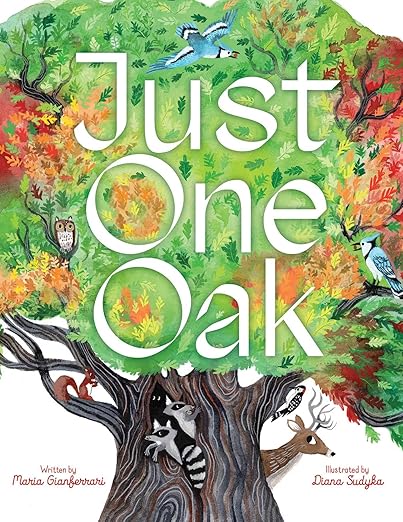 JUST ONE OAK: WHAT A SINGLE TREE CAN BE, by Maria Gianferrari and Diana Sudyka, Beach Lane Books, April 7, 2026, Hardcover, $19.99 (ages 4-8)
Explore an oak tree, from its leafy crown to its roots underground, and learn all the amazing ways it supports the animals, plants, and habitat where it lives.
An oak tree is so much more than meets the eye. From tiny fungi to mighty mammals, this amazing tree contains a whole world.
For insects and birds, the oak’s leaves, branches, and bark are a home. For bears and squirrels, the thousands of acorns the oak produces are a nutritious superfood. Owls, deer, foxes, and many more creatures are drawn to the rich and healthy environment an oak creates. Because of a single oak tree, its many neighbors flourish. —Synopsis provided by Beach Lane Books
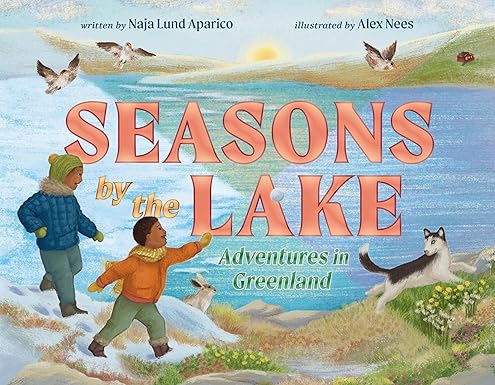 SEASONS BY THE LAKE: ADVENTURES IN GREENLAND, by Naja Lund Aparico and Alex Nees, Dial Books, March 17, 2026, Hardcover, $18.99 (ages 4-8)
Brothers Minik and Nuka have a whole year of adventures ahead in Greenland, including finding ice shards from glaciers in the spring to picking crowberries during the summer when the sun barely sets.
The darkness of winter reveals Arsarnerit, or the Aurora Borealis, above as the two whisper about the Inuit myth behind the lights.
Greenlandic Inuk author Naja Lund Aparico combines a sweet sibling story with an exploration of the seasons in the Arctic featuring stunning illustrations by German and Choctaw illustrator Alex Nees that captures the sweeping landscape. —Synopsis provided by Dial Books
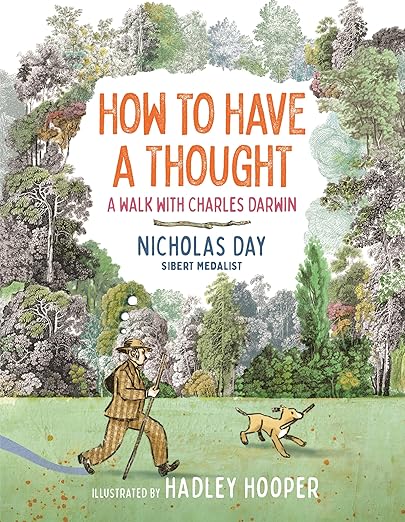 HOW TO HAVE A THOUGHT: A WALK WITH CHARLES DARWIN, by Nicholas Day and Hadley Hooper, Neal Porter Books, Jan. 13, 2026, Hardcover, $19.99 (ages 4-8)
How do you work through a complicated idea, solve a tricky problem, or make a big discovery? Charles Darwin had a lot of ways to do it. He paced in circles and hit rocks with a stick. He studied the bones of his dinner. He even rode around the world on a boat called The Beagle.
These methods may sound unorthodox, but they led him to some pretty great thoughts—and discoveries about the origins of life as we know it.
Sibert Medalist Nicholas Day’s conversational text has all the charm of a true story told by your smartest, most interesting friend. With Hadley Hooper’s engrossingly textured illustrations, How to Have a Thought is both an introduction to Darwin and an invitation to live with brilliant curiosity. —Synopsis provided by Neal Porter Books
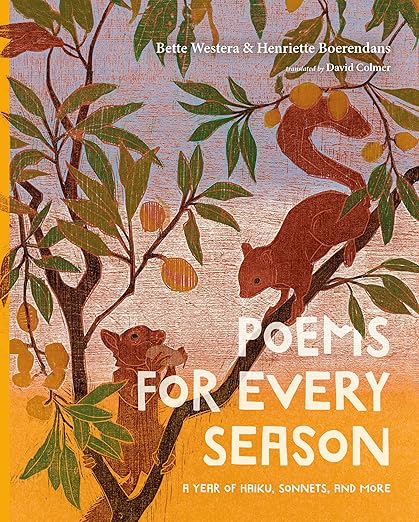 POEMS FOR EVERY SEASON: A YEAR OF HAIKU, SONNETS, AND MORE, by Bette Westera, Henriette Boerendans, David Colmer, Eerdmans Books for Young Readers, Feb. 17, 2026, Hardcover, $18.99 (ages 5-9)
In this stunning combination of wordcraft and woodcuts, readers meet the changing seasons with thirteen poems, all in different poetic structures, from award-winning Dutch author Bette Westera. Each season opens with a haiku, following with the season’s months and their poems. Readers will dance into March with a rondel for a newborn lamb, wave in the August wind with a five-line tanka for a summer sunflower, snuggle in for December with a limerick for all those who stayed home instead of going south…
Exquisite woodcut art from Henriette Boerendans, an artist making her US and UK debut, showcases the wonder of the natural world. Back matter offers further details about the poems’ structures―offering the perfect opportunity for young writers to write their own sonnet for February or quatrain for September. Translated from the Dutch by David Colmer. —Synopsis provided by Eerdmans Books for Young Readers
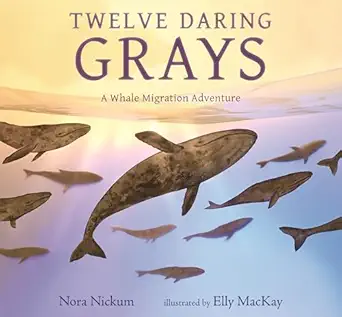 TWELVE DARING GRAYS: A WHALE MIGRATION ADVENTURE, by Nora Nickum and Elly MacKay, Candlewick, February 10, 2026, Hardcover, $18.99 (ages 5-8)
In February, some twenty thousand gray whales set off from Baja California on a long, hard journey north, toward food and survival.
Hungry and thin, they push on week after week, past California, Oregon, and Washington to the tip of that state, where twelve of them peel off and make an eastward turn into the Salish Sea. There they will wait in the deep for the tide to rise, only to swim into the dangerously shallow waters of a mudflat, hurriedly plowing the bottom for food before the water recedes once more.
Will their daring be rewarded? Will they survive to join their fellow whales in the Bering and Chukchi Seas?
Elly MacKay’s fluid, saturated artwork sets the stage for the whales’ exciting journey, complementing Nora Nickum’s lyrical, factual narrative. Back matter takes a deeper dive into the intriguing habits of gray whales and offers resources for curious readers. —Synopsis provided by Candlewick
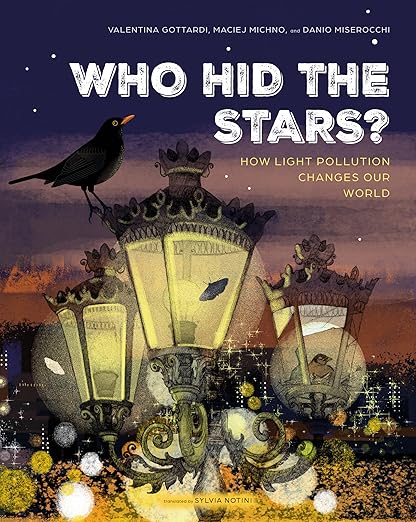 WHO HID THE STARS?: HOW LIGHT POLLUTION CHANGES OUR WORLD (SPECTACULAR STEAM FOR CURIOUS READERS (SSCR)), by Danio Miserocchi, Maciej Michno, Valentina Gottardi, Sylvia Notini, Eerdmans Books for Young Readers, March 24, 2026, Hardcover, $18.99 (ages 8 and up)
When streetlights outshine the stars, what does that mean for plants, animals, and us? This absorbing nonfiction picture book investigates artificial light and its unexpected impact on our planet. Who Hid the Stars? explores fascinating topics including:
-
-
- How artificial light developed throughout history―from fire to LEDs
- How city lights interrupt bird migration patterns
- How streetlights gather insects―and their predators
- How turtles struggle to hatch without darkness
- How plant growth changes in artificial light
- How humans can fight light pollution and stop it from harming nature!
-
With lush ink, acrylic, and digital illustrations and scientifically sound, yet approachable text, Who Hid the Stars? is a memorable way to explore conservation and biodiversity. This book will ignite children’s curiosity and inspire them to take care of Earth―starting by turning out the lights.
Translated from Italian by Batchelder Award winner Sylvia Notini, Who Hid the Stars? includes a glossary of terms, a further reading list, and a link to the authors’ bibliography. The browsable book is ideal for STEAM units along with Earth Day and World Wildlife Day celebrations.
Part of Eerdmans’ Spectacular STEAM for Curious Readers series. The book’s original edition was shortlisted for Italy’s Premio Piccolo Galileo (Little Galileo Award). —Synopsis provided by Eerdmans Books for Young Readers
Copyright © 2026 Cracking the Cover. Unless otherwise noted, all books — digital and physical — have been provided by publishers in exchange for honest and unbiased reviews. All thoughts and opinions are those of the reviewer.
